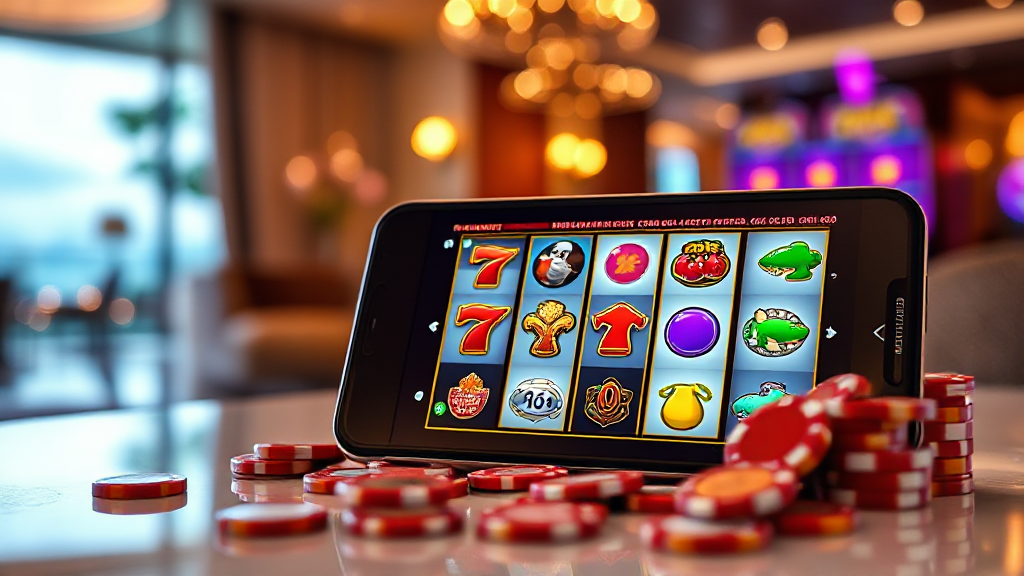
How TopOne Game Slots and Card Games Actually Behave
Most players describe a game by how it feels: a hot streak, a cold deck, a machine that seems to be “due.” That language is human, and it is completely useless for understanding what is actually happening on screen. A game does not have moods. It has rules, a random number generator, and a payout structure that can be measured over thousands of rounds. This piece is not a tip sheet. It is a walkthrough of the mechanics behind the best game experiences on TopOne Game — how slot reels resolve, how card hands distribute, and what expected value really means when you press spin or deal. If you have ever wanted the maths rather than the folklore, this is the version of the conversation worth having.
Randomness Is Not Fairness — It Is Just Independence
The first mental correction is the hardest: random does not mean balanced. When a slot reel spins, the outcome of that spin has no memory of the previous one. The reels in a modern video slot are not physical strips that have to “catch up” to a long-lost jackpot; they are virtual sequences, and each stop is drawn independently. That means a machine can produce three dead spins in a row and then a full-screen win, and neither event makes the other more or less likely.
This is why the phrase “due for a win” is mathematically empty. If a game has a 1-in-200 chance of triggering a bonus feature on any given spin, the chance on spin 201 is still 1-in-200, regardless of whether the last 200 spins were barren. The reels do not owe you anything. What they do have is a fixed probability distribution, and that distribution is what determines long-run behaviour. On TopOne Game, the slot catalogue is built on this principle — each title has its own reel configuration, volatility profile, and hit frequency, and those numbers, not the last ten spins, define what you should expect.
The practical takeaway is not “give up.” It is to stop reading patterns into noise. Streaks feel meaningful because human brains are pattern-matching machines, but in an independent trial system, a streak is just a run of coin flips that happened to land the same way. The maths does not care.
Reading Slot Volatility Like a Probability Distribution
Volatility is the single most misunderstood number in slot design. Low-volatility slots pay small amounts frequently; high-volatility slots pay rarely but with larger potential spikes. Neither is “better” in isolation. They are different shapes of the same distribution, and the shape tells you what a session will feel like before you ever press spin.
Consider a concrete example. A low-volatility slot might hit a winning combination on roughly 40% of spins, with most wins returning less than your stake. Over 1,000 spins, the results cluster tightly around the expected return. A high-volatility slot might hit only 15% of the time, but a single hit can return 50x or more. Over the same 1,000 spins, the outcome range is far wider — you might finish well ahead or well behind, and both are normal within the distribution.
This is where the TopOne Game slots catalogue becomes genuinely interesting to analyse. Because the platform groups titles by style — classic reels, megaways-style layouts, cluster pays, and bonus-buy formats — you can compare volatility profiles side by side rather than guessing. The top one rule of thumb is simple: match the volatility to your session length. If you plan to play for twenty minutes, a low-volatility title gives you more spins and more feedback. If you are chasing a single large outcome, a high-volatility title is the mathematically consistent choice, provided you accept that most sessions will end without the spike.
The return-to-player figure, usually expressed as a percentage, is the long-run average. A 96% RTP slot returns 96 units for every 100 wagered across millions of spins. It says nothing about your next spin. It is a property of the machine, not a promise to you.
Teen Patti and Card Games: Combinatorics in Plain Sight
Card games are where probability becomes visible, because the deck is finite and the combinations can be counted. Teen Patti, the three-card game that anchors TopOne Game’s card section, is a clean example. A standard 52-card deck produces 22,100 possible three-card hands. Of those, the distribution is heavily skewed: high-card hands make up the vast majority, while a trail (three of a kind) appears in only 52 of those 22,100 combinations.
That single number reframes the entire game. If you are playing a hand and wondering whether your opponent holds a trail, the base rate is roughly 0.24% before any betting information is considered. The bets themselves carry information — a large raise narrows the plausible range — but the underlying combinatorics set the floor. This is why experienced players talk about hand ranges rather than specific cards. They are not guessing; they are updating a probability estimate as new information arrives.
The same logic applies to the live casino tables on the platform. In games like blackjack, the composition of the remaining deck shifts the odds of busting or hitting 21, which is why basic strategy charts exist. They are not opinions. They are the output of enumerating every possible hand and choosing the action with the highest expected value. In baccarat, the draw rules are fixed, which means the house edge on the banker bet is a known constant rather than a variable you can influence. The top one game principle here is that card games reward understanding of structure far more than they reward intuition.
Expected Value: The Only Number That Survives the Long Run
Expected value is the average outcome of a bet if you could repeat it infinitely. It is calculated by multiplying each possible outcome by its probability and summing the results. A bet that wins 1 unit with 50% probability and loses 1 unit with 50% probability has an expected value of zero. A bet that wins 2 units with 40% probability and loses 1 unit with 60% probability has an expected value of 0.2 units — positive, even though you lose more often than you win.
This is the concept that separates analytical players from reactive ones. A game can feel bad and still be mathematically sound, and a game can feel generous and still bleed value. The slot with a 96% RTP has a negative expected value of 4% per unit wagered. The Teen Patti side bet with a 92% RTP has a negative expected value of 8%. Neither is a scam; both are priced products with a built-in margin. Understanding that margin is the difference between playing with awareness and playing with hope.
Variance is the companion concept. Two games can share the same expected value but behave completely differently in the short term. A high-variance game produces wider swings, which means your bankroll needs to be larger to survive the downswings. This is why bankroll sizing is a maths problem, not a discipline problem. If your session bankroll is 20 units and the game’s volatility is high, the probability of ruin is substantial even if the expected value is identical to a low-variance alternative.
On TopOne Game, the bonus and reward structures interact with expected value in a way worth noting. A deposit bonus effectively adds units to your bankroll, which extends the number of trials you can survive before variance catches up. It does not change the house edge on any individual bet. It changes your capacity to absorb the distribution’s natural swings. That is a meaningful distinction, and it is the reason bonus terms — wagering requirements, game weighting, time limits — matter more than the headline percentage.
Why Session Length Changes What You Experience
The law of large numbers says that as the number of trials increases, the observed average converges toward the expected value. The inverse is also true: in short sessions, the observed result can deviate wildly from the expected value. This is why two players can play the same slot for an hour and report completely different experiences. One hit a bonus round in the first fifty spins; the other went three hundred spins without a meaningful win. Both outcomes are consistent with the same underlying distribution.
The practical implication is that short sessions are dominated by variance, not by edge. If you play twenty spins, your result is essentially noise. If you play two thousand spins, your result starts to reflect the machine’s actual return. This is not a reason to play longer — it is a reason to understand that a short session tells you almost nothing about a game’s quality. Judging a slot by a fifty-spin sample is like judging a coin by five flips.
Session length also interacts with the psychological side of play. The human brain releases dopamine in anticipation of reward, not just on receipt of it, which is why near-misses feel almost as stimulating as wins. Slot designers know this, and the visual language of modern slots — the almost-aligned symbols, the expanding wilds that stop one reel short — is calibrated to that response. Recognising the mechanism does not make you immune to it, but it does let you separate the feeling from the maths. The no one fun trap is believing that a near-miss means the machine is warming up. It does not. It means a random draw landed close to a paying line, which is exactly what the probability distribution predicts will happen sometimes.
Building an Analytical Approach Without Fooling Yourself
An analytical approach to gaming is not about beating the house edge. On most casino products, the edge is fixed and the maths is settled. The value of thinking probabilistically is that it replaces superstition with accurate expectations. You stop believing that a machine is due, that a dealer is hot, or that a particular sequence of reds and blacks predicts the next spin. You start understanding that each product has a price, a variance, and a distribution, and that your job is to choose which distribution you want to participate in.
Three habits support that shift. First, read the rules and the RTP before you play, not after. The information is published for a reason. Second, size your bankroll to the volatility of the game, not to your optimism. A high-variance slot demands a larger cushion than a low-variance one. Third, treat every session as a sample, not a verdict. A losing session on a 96% RTP game is not evidence that the game is rigged; it is evidence that variance exists and you were on the wrong side of it for that sample.
TopOne Game provides the raw material for this kind of analysis: a slot library with distinct volatility profiles, a Teen Patti section built on countable combinatorics, and live tables where the rules are fixed and the edges are known. None of that guarantees an outcome. What it does is let you engage with the games as probability systems rather than as luck dispensers. The best game, mathematically speaking, is not the one that feels hottest. It is the one whose distribution you understand, whose variance you can afford, and whose expected value you have accepted before you press the first spin.
